
DNB cuts 400 full-time equivalent roles as it adapts to AI and a “new reality”
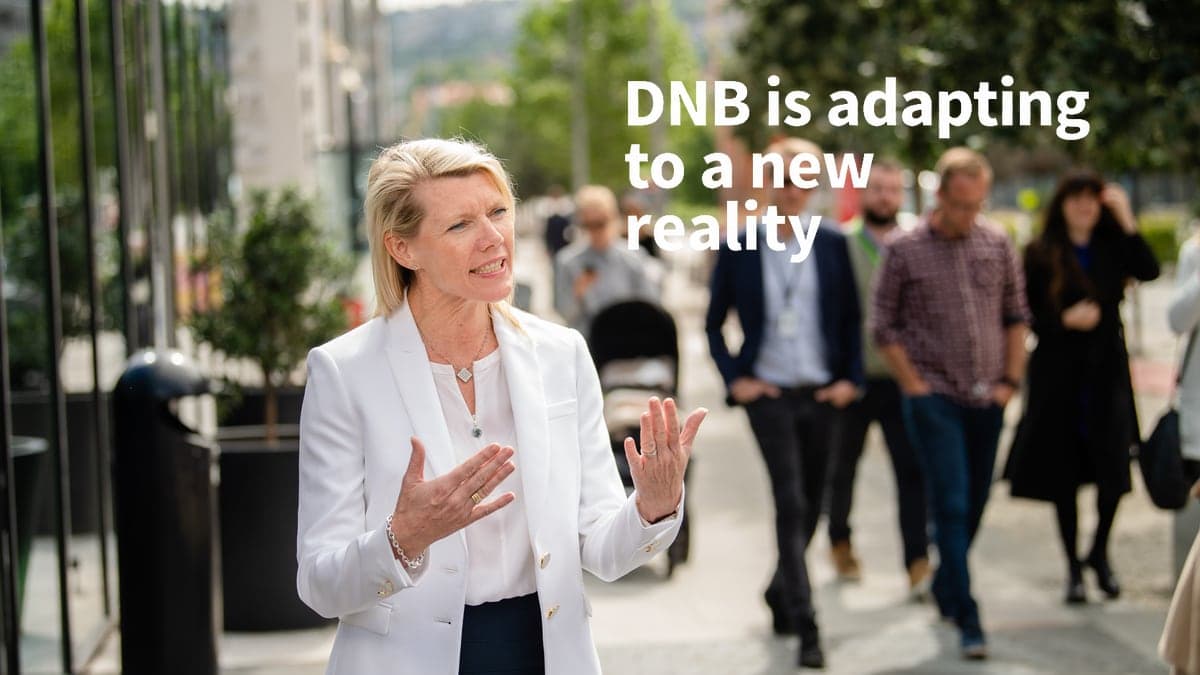
Norway’s largest bank plans to reduce staffing in Technology & Services by around 400 full-time equivalents. DNB says AI agents are already taking over tasks previously performed manually, including customer checks, technology development and coding. Group CEO Kjerstin Braathen describes the restructuring as an adjustment to “a new reality”.
On Tuesday, 6 October, DNB announced a major restructuring of Technology & Services, the part of the bank responsible for areas including technology, IT systems, operations, security and various banking processes.
The announcement was more than a routine press release. It was published as inside information through the Oslo Stock Exchange and Euronext. This means DNB considers the information significant enough for the company and the market to fall under the disclosure rules for listed companies. Euronext classifies both the Norwegian and English versions as inside information. Euronext Live
The central message is unusually clear.
DNB says it has spent the past few years simplifying internal processes while introducing agentic artificial intelligence in several parts of the business.
Agentic AI goes beyond answering questions in the way a conventional chatbot does. A system can be assigned a task, use information and tools, work through several steps and carry out parts of the job itself.
DNB says this technology is now replacing tasks that were previously handled manually. The bank specifically identifies customer data checks, KYC (Know Your Customer) processes, technology development and coding. Cision News
As a result, the bank believes it needs fewer full-time equivalent roles.
Around 400 full-time equivalent roles will go
DNB says it will change the structure and skills mix of Technology & Services to realise the benefits of new technology and working practices.
The result is a reduction of around 400 full-time equivalents. Cision News
A full-time equivalent, or FTE, represents the workload of one full-time employee over a year. A reduction of 400 FTEs therefore does not necessarily mean that exactly 400 people will be made redundant.
Some employees may leave voluntarily, while others may receive severance packages or move to other jobs within the bank. DNB has not yet disclosed how the overall reduction will be achieved.
But the scale of the reduction is substantial.
DNB’s Factbook for the second quarter of 2026 lists 2,210 full-time equivalent positions in Technology & Services as of 30 June. DNB
Geir Jarle Ness, a representative of the Norwegian trade union Tekna at DNB, told Kode24 that around 2,400 people currently work in Technology & Services. The figures are not directly comparable: one measures full-time equivalents and the other counts people, and they refer to different points in time. Even so, they give a sense of how extensive the cuts are. Kode24
“A new reality”
Group CEO Kjerstin Braathen explicitly links the restructuring to artificial intelligence.
She says:
“Artificial intelligence is changing how we work and how we deliver services to our customers. We are already seeing significant benefits, which is why we are now adapting the organisation to a new reality.”
DNB also acknowledges that the restructuring affects employees who have worked at the bank for many years. It says the process will be carried out in close dialogue with employee representatives. Cision News
The phrase “a new reality” matters because the bank is not describing a hypothetical future.
DNB says the benefits are already materialising.
What will AI do at the bank?
DNB identifies four areas where it is already seeing substantial efficiency gains:
Customer data checks. Banks hold large amounts of customer information that must be checked, updated, compared and assessed.
KYC. This stands for Know Your Customer. Banks are legally required to know who their customers are and understand how their banking relationships are used. This may involve checking identity, business activities, ownership, the source of funds and whether activity appears unusual.
KYC is an important part of preventing financial crime and money laundering.
Technology development. AI can support several stages of developing, testing, modifying and maintaining the bank’s IT systems.
Coding. DNB specifically names coding as an area where AI agents can already deliver significant productivity gains. Cision News
That last point makes the announcement particularly relevant to the technology industry.
Kode24 asked DNB how many developers would actually be affected. The bank declined to provide a figure. It also declined to explain to Kode24 why the entire staff reduction had to happen so quickly. Kode24
It would therefore be premature to say that DNB is “replacing 400 developers with AI”.
We do not know that.
What we do know is that DNB itself identifies coding and technology development as areas where AI is making work more efficient, while reducing staffing in Technology & Services by around 400 FTEs.
How do AI agents differ from conventional AI assistants?
A conventional AI assistant can help an employee with an individual task.
A developer might ask it to write a piece of code, explain an error or suggest a solution.
An AI agent can go further.
It can be given a goal, investigate information, write or modify code, use different tools, check the results and complete several steps within the same workflow.
The same principle applies to administrative work in banking.
Instead of an employee manually gathering information from several systems, comparing data, checking documents and updating a case, an AI agent can carry out parts of that workflow itself.
This does not necessarily remove the human from the process altogether. But if one employee using AI can handle far more cases than before, the business needs fewer working hours to process the same volume of work.
This is the kind of productivity gain DNB now says it wants to realise.
DNB will not disclose which AI systems are behind the changes
An important part of the picture is still missing.
DNB has publicly explained what its AI agents are used for, but its stock exchange announcement does not identify the specific models, AI providers or agent platforms used for KYC, technology development or coding.
We therefore cannot yet establish whether these systems use models from OpenAI, Anthropic, Microsoft or other providers.
What we do know is that DNB already uses several AI solutions elsewhere in the business.
In its reporting for 2025, DNB said employees had access to AI features built into everyday software, and that almost half of its staff had access to licensed AI tools for more extensive use. The bank has also publicly discussed Microsoft Copilot and an internal “GenAI Toolbox”. DNB Content
However, this does not establish that those particular tools are behind the reduction of 400 FTEs.
That distinction matters.
DNB already has AI that carries out tasks
Other products the bank has launched nevertheless show the direction it is taking.
In February 2026, DNB introduced the AI assistant Micro in DNB Regnskap, its accounting software.
DNB describes Micro as more than a chatbot. The system can understand what a user wants and then perform actions in the accounting system through APIs.
An API, or application programming interface, is a way for software systems to communicate with one another. Rather than simply telling the user what to do, the AI system can use an API to do it. DNB
Micro can interpret and post invoices and supporting accounting documents, create invoices, record working hours, find earlier documents and retrieve financial information. DNB says the solution combines a language model with various tools, with data processed through Microsoft Azure. DNB Regnskap Help Centre
This is a concrete example of the difference between AI that advises and AI that acts.
DNB has not said that Micro is connected to the latest staff cuts. But the product shows the kind of agent-based technology the bank is already developing and using.
AI is also being used in customer service
DNB has also begun using AI during customer service phone calls.
Calls can be transcribed automatically, and AI drafts a summary for the adviser to check.
Calls can also be categorised automatically according to why the customer contacted the bank. DNB
This is another example of the same mechanism.
Work that previously had to be done manually after each call can now be automated or largely automated.
Again, DNB has not said that this particular system is connected to the reduction of 400 FTEs.
But it shows how AI is gradually becoming part of the workflows themselves.
Around 350 of the FTE cuts will be in Norway
Further details emerged after DNB’s stock exchange announcement.
FinansFokus, an editorially run news website owned by the Norwegian financial sector trade union Finansforbundet, spoke to Lillian Hattrem, the union’s chief representative at DNB Group.
According to FinansFokus, around 350 FTEs will be cut in Norway, with the remainder of the reduction taking place at DNB’s office in Riga, Latvia.
In Norway, Oslo and Bergen will be most affected, although some positions elsewhere may also be involved. FinansFokus
These details were not included in DNB’s original stock exchange announcement.
E24 asked DNB directly which countries would be affected. The bank declined to answer. E24
FinansFokus also reports that around 1,500 Finansforbundet members in Norway are within the redundancy selection pool: the group of employees considered as part of the restructuring. FinansFokus
This does not mean that 1,500 people will lose their jobs. It means they are within the part of the organisation where around 350 Norwegian FTEs are to be removed.
Before the summer, the plans initially focused on KYC
Kode24 has also uncovered a detail absent from DNB’s own announcement.
Tekna representative Geir Jarle Ness says employee representatives were told before the summer that cuts were planned in the department handling KYC.
After the summer, they were informed that the restructuring would extend to all of Technology & Services. Kode24
Ness believes DNB may be moving too soon to translate AI productivity gains into staff reductions.
He says the bank has considerable confidence that AI will make software development more efficient, but argues that DNB should have seen more evidence of the actual impact before removing people from the organisation. Kode24
DNB will not explain the severance arrangements
E24 asked the bank whether affected employees would receive severance packages.
DNB replied that employees could receive a “transition support package”.
When E24 asked how this differed from a severance package, the bank said it was not appropriate to comment on the details. E24
Elin Sandnes, Group Executive Vice President for Technology & Services, gave Kode24 a similar answer.
She pointed to DNB’s established arrangements for restructuring and staff reductions, including the possibility of transition support packages, but declined to discuss what they would contain. Kode24
FinansFokus reports that Finansforbundet wants as many cases as possible to be resolved voluntarily, through redeployment, financial exit agreements or other suitable employment. FinansFokus
Employee representatives want consultants to go first
Tekna’s employee representatives also have a specific demand.
Before any permanent employees who belong to the union are made redundant, Tekna believes external consultants doing equivalent work should be let go first.
Ness says DNB has “a great many” consultants in addition to its permanent employees in Technology & Services. Kode24
DNB has not yet disclosed how the restructuring will affect its use of consultants.
The bank wants to complete the cuts before the end of the year
DNB plans to carry out the staff reductions in the fourth quarter of 2026.
Restructuring costs will be recognised in the same quarter, while the bank expects the full cost savings to take effect from the second quarter of 2027.
DNB says further information about the financial impact will be released later this year. DNB
Finansforbundet considers the timetable too aggressive.
Deputy leader Arne Fredrik Håstein says the bank must consider the alternatives for each employee before making anyone redundant. He argues that it is difficult to see how this can be done properly before the end of the year. NTB Kommunikasjon
“How the gains are used is a choice”
Finansforbundet also challenges the assumption that higher productivity from AI must lead to fewer employees.
Håstein says the gains could instead be used to improve services, develop skills and allow more time for tasks that require human judgement and experience. Finansavisen
This is an important point.
AI making a business more productive is one thing.
What the business chooses to do with that increase in productivity is a management decision.
DNB has chosen to realise part of the benefit through lower staffing levels.
This did not start today
The latest staff reduction follows several earlier rounds of cuts.
In September 2024, DNB announced plans to reduce staffing by around 500 FTEs, mainly in staff and support functions. Even then, the bank pointed to digitalisation, automation and the need for greater cost efficiency. Cision News
In August 2025, it announced a further reduction of around 100 positions in Technology & Services.
Those cuts affected areas including KYC, AML and operational security.
AML stands for Anti-Money Laundering.
DNB said at the time that technological developments and significant advances made it possible to work more efficiently in these areas. Finansavisen
FinansFokus puts the total across the three larger rounds announced since 2024 at around 1,000 positions or FTEs. FinansFokus
The goal is to become the most cost-efficient bank in the Nordic region
The restructuring also fits DNB’s wider strategy.
The bank has four stated strategic goals. One is to become:
“The most cost-efficient bank in the Nordic region.” DNB
This provides important context.
AI is not the only factor at work. For several years, DNB has been pursuing digitalisation, simplification, centralisation and cost reductions.
But the latest announcement stands out because the bank explicitly says that agentic AI is replacing tasks previously performed manually, and directly links those gains to a substantial reduction in staffing.
Will customers pay less?
E24 put a natural question to DNB:
Will the efficiency improvements and lower costs mean cheaper banking or lower interest rates for customers?
DNB did not answer directly.
Instead, Elin Sandnes said new technology and artificial intelligence made it possible to offer simpler, faster and better services. E24
We therefore do not yet know how much of the saving will be passed on to customers, or how large the financial savings will actually be.
DNB has said it will release further financial details later this year.
Could AI lead to further cuts?
E24 also asked DNB directly whether it expected AI to lead to more cuts in the future.
DNB did not say no.
Sandnes replied that AI and other technology would continue to influence how the bank works, which tasks are performed and which skills DNB needs.
She added that the bank must continually adapt to technological developments and its customers’ needs. E24
This is not an announcement of another round of staff cuts.
But DNB has also offered no guarantee that this will be the last time technological gains lead to lower staffing levels.
The key questions still unanswered
We now know quite a lot about the decision itself, but some important questions remain open.
DNB has not disclosed the specific AI models and agent platforms used in the systems behind the efficiency gains.
The bank has not said how many developers will be affected, or how the reduction of 400 FTEs will be split between coding, KYC, other banking processes and the remaining technology functions.
DNB has also not published the calculations explaining why around 400 FTEs is the right number to cut.
Finansforbundet’s representatives say they have seen the underlying figures, but believe they have not received documentation showing that these are the right cuts to make. FinansFokus
We also do not yet know the expected annual cost savings.
Nor do we know how much of the reduction will be achieved voluntarily, or how many people may ultimately be made redundant.
Why this matters
For years, the debate about AI and jobs has focused primarily on the future.
Would AI one day become capable enough for businesses to need fewer people?
The DNB announcement is different.
Norway’s largest bank is now publicly telling the market that AI agents already perform tasks people previously handled manually, that the bank is already seeing significant productivity gains, and that it will therefore restructure the organisation with around 400 fewer FTEs.
This does not mean 400 people are simply being replaced, one for one, by 400 AI agents.
The reality is more complex. DNB is simplifying processes, automating work, changing its skills requirements, adopting more technology and reorganising the business at the same time.
But the connection between AI and jobs is no longer theoretical.
It is now written into a stock exchange announcement from Norway’s largest bank.
And DNB’s own wording may describe the shift best:
The bank is adapting its organisation to “a new reality”.
Sources
Primary sources from DNB
-
DNB, Norwegian stock exchange announcement: “DNB implements organisational changes in Technology & Services”
https://news.cision.com/no/dnb-bank-asa/r/dnb-gjennomforer-organisatoriske-endringer-i-technology---services,c4404974 -
DNB Investor Relations, English version: “DNB making organisational changes in Technology & Services”
https://www.ir.dnb.no/press-and-reports/press-releases/dnb-making-organisational-changes-technology-services-2485833 -
Euronext / Oslo Stock Exchange: classification of the announcement as inside information
https://live.euronext.com/nb/markets/oslo/equities/company-news -
DNB Factbook, second quarter of 2026
Source for the number of full-time equivalent positions in Technology & Services.
https://www.ir.dnb.no/sites/default/files/pr/202607138455-3.pdf -
DNB Annual Report 2025
Background on AI tools, Microsoft Copilot and DNB’s “GenAI Toolbox”.
https://content.dnb.no/docs/9728317/annual-report-2025-dnb-group.pdf -
DNB: Micro in DNB Regnskap
An example of agentic AI that can perform actions.
https://www.dnb.no/dnbnyheter/no/bedrift/micro-dnb-regnskap -
DNB Regnskap: help page for the Micro AI assistant
Further technical information about how Micro works.
https://hjelp.dnbregnskap.dnb.no/no/article/bruk-av-ai-assistenten-micro-s3v63a/ -
DNB: customer service privacy information
Source for AI transcription, summaries and categorisation of customer calls.
https://www.dnb.no/en/about-us/privacy-policy/dnb-bank-asa/customer-service -
DNB: strategy and values
Source for the goal of becoming “the most cost-efficient bank in the Nordic region”.
https://www.dnb.no/om-oss/strategi-og-verdier -
DNB, 2024 stock exchange announcement: “Updated strategy and cost reductions”
Background on the earlier reduction of around 500 FTEs.
https://news.cision.com/no/dnb-bank-asa/r/oppdatert-strategi-og-kostnadsreduksjoner,c4035301
Reporting and interviews
-
E24: “DNB cuts staff and invests in AI”
Includes E24’s own questions to DNB about severance arrangements, the countries affected, the impact on customers and possible future AI-related cuts.
https://e24.no/boers-og-finans/i/b8zly3/dnb-varsler-nedbemanning-kutter-400-aarsverk -
Kode24: “DNB cuts 400 technology roles, citing AI coding”
Includes questions to DNB about how many developers will be affected.
https://www.kode24.no/artikkel/dnb-nedbemanner-400-innen-teknologi-viser-til-ki-koding/274407 -
Kode24: “One in six must go in DNB division: there will probably be a lot of distress”
Reporting featuring Tekna representative Geir Jarle Ness and further responses from DNB.
https://www.kode24.no/artikkel/en-av-seks-ma-ga-i-dnb-avdeling-blir-sikkert-mye-fortvilelse/274425 -
FinansFokus: “DNB cuts 400 in Technology & Services”
Reports that around 350 FTEs will be cut in Norway and the rest in Riga, with information from DNB Group’s chief union representative, Lillian Hattrem.
https://www.finansfokus.no/2026/10/06/dnb-kutter-400-i-technology-services/ -
Finansavisen: reactions to DNB’s AI-related cuts
Source for Finansforbundet’s argument that how AI productivity gains are used is a choice.
https://www.finansavisen.no/finans/2026/10/06/8385601/reagerer-pa-dnbs-ai-kutt-hvordan-gevinsten-tas-ut-er-et-valg -
Finansavisen: “Further DNB cuts”, 2025
Historical background on earlier cuts in KYC, AML and operational security.
https://www.finansavisen.no/finans/2025/08/26/8288479/nye-dnb-kutt
Trade union source
- Finansforbundet / NTB: “We must be careful not to treat AI as a law of nature that automatically means fewer employees”
Source for Finansforbundet’s response to the pace of the restructuring and its views on how AI gains should be used.
https://kommunikasjon.ntb.no/pressemelding/19093155/finansforbundet-vi-ma-passe-oss-for-a-gjore-ki-til-en-naturlov-som-automatisk-betyr-faerre-ansatte?lang=no&publisherId=17847596