
Four groups, four very different views of AI
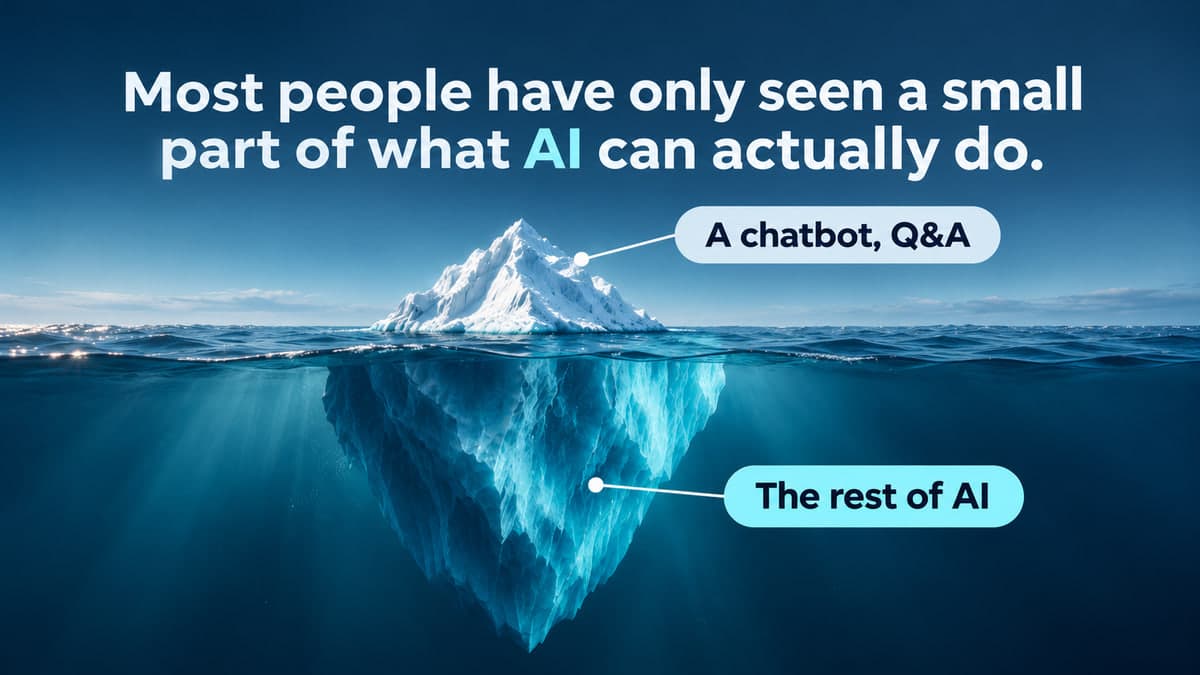
Why do some people think AI is still a fairly limited chatbot, while others find that work that used to take weeks or months can now be completed in hours or days with the help of AI? AI researcher Andrej Karpathy holds a PhD from Stanford, was a founding member of OpenAI and served as Director of AI at Tesla, where he led the development of the computer vision technology behind Autopilot. Today, he works on AI research at Anthropic, the company behind Claude.
In a post on X on October 11, 2026, Karpathy divides the world's population into four groups. He argues that differences in how people perceive AI largely come down to which models they use, what kinds of tasks they try to solve and how advanced the AI systems they have access to are.
The four groups
1. People who have barely used AI
About 6 billion people, 75 percent of the world's population.
This group has little or no direct experience with large language models. They may know about AI through the news, social media or what others tell them, but have not explored for themselves what the technology can be used for.
Their views are therefore largely based on other people's experiences.
2. People who use AI as a chatbot
About 1–2 billion people, roughly 20 percent.
This group uses services such as ChatGPT, often the free versions, to ask questions, look up information, write texts and get help with everyday tasks.
They also find that AI makes mistakes, misunderstands questions or gives poor answers. For many, the technology therefore seems like a slightly better search engine or a useful writing assistant.
Karpathy believes that many people, including executives and other working professionals, belong to this group. They may understand that AI is developing rapidly, but have not necessarily experienced the biggest advances in practice. As a result, they may lack an understanding of what the most advanced AI systems can actually do.
3. People who use advanced AI agents
About 20 million people, 0.2 percent.
Here, Karpathy places people who use the most advanced AI models for programming, mathematics and other technical tasks, both at work and in their personal lives.
The difference is that they do not just ask AI for answers. They let AI agents carry out work, often with access to files, code, terminals and other tools.
With tools such as OpenAI Codex and Claude Code, you can describe a program in natural language and let the agent write code, run tests, fix errors and develop the solution further.
Karpathy points out that large projects that once took weeks or months can, in some cases, now be completed much faster. He says that he was still writing code manually less than a year ago, while AI agents now do much of that work.
4. People with access to the most advanced AI systems
About 5,000 people, roughly 0.00006 percent.
This is the smallest group. Karpathy is referring to people with internal access to experimental AI systems within the organizations developing the technology.
He describes systems in which thousands of AI agents can work together over extended periods on highly complex tasks, including software development, cybersecurity, scientific research and mathematics.
Karpathy believes that development is moving so quickly that people's ability to review and understand the results is beginning to fall behind.
At the same time, it is important to distinguish between his descriptions and what has been publicly documented. We do not have full insight into the capabilities of these internal systems.
Why are the differences growing?
Karpathy points to three main reasons.
First, it comes down to the tasks AI is given. A chatbot answering a simple question shows only a small part of what an advanced model could potentially do. Larger and more demanding projects can draw on far more of the model's capabilities.
Second, AI is developing at different rates in different areas. Progress is particularly clear in programming and mathematics, where it is often possible to check automatically whether the result is correct. Such tasks are well suited to training and improving AI models.
Third, it comes down to access. There is a big difference between an older free model, an advanced paid model and an experimental system that is not yet available to the public.
What does this mean?
Karpathy's point is that people can discuss AI and have completely different views of what the technology can do because they have experienced very different sides of it.
Someone who mostly uses AI to write emails has a different frame of reference from someone who uses AI agents to build software every day.
At the same time, this grouping is not a definitive answer. The numbers are Karpathy's own rough estimates, not documented statistics, and how well AI works still depends on the task and how the systems are used.
Perhaps the most important thing is not which group you belong to, but that it is difficult to assess AI's potential without trying the technology on more demanding tasks.
A conversation with a chatbot and an AI system that independently carries out a larger project may be based on related technology, yet produce two entirely different experiences.
It is this difference that Karpathy believes is growing ever larger.